

How to Properly Maintain a Ceramic Coated Vehicle
Ceramic coating maintenance is the process of preserving the performance, appearance, and durability of a professionally applied ceramic coating on a vehicle’s exterior surfaces. This guide explains how ceramic coatings work, why maintenance is required, and which practices protect coating integrity over time for vehicles driven in demanding environments such as Halifax.
Ceramic coating maintenance is the routine care required to preserve the hydrophobic, protective, and visual properties of a ceramic-coated surface. Although ceramic coatings provide long-term protection, they are not maintenance-free. Environmental exposure gradually degrades surface performance if proper care is not followed.
Maintenance focuses on safe washing, contamination control, and periodic inspection to ensure the coating continues to bond effectively to the clear coat.
Ceramic coatings form a semi-permanent bond with automotive clear coat, creating a hard, hydrophobic layer. While durable, this layer remains exposed to environmental stressors.
Ceramic coating maintenance is required because coatings are affected by:
Road salt and winter de-icing chemicals
Industrial fallout and airborne iron particles
Acid rain and mineral-rich water deposits
Road film and organic contamination
Improper washing techniques
Without maintenance, contamination masks hydrophobic behavior, reduces gloss, and shortens coating lifespan.
The lifespan of a ceramic coating depends on coating quality, environmental exposure, and maintenance consistency.
Entry-level coatings: 1–2 years
Professional-grade coatings: 3–5 years
Premium multi-layer coatings: Up to 7 years
Regular maintenance preserves coating thickness, water behavior, and UV resistance throughout the service life.
Safe washing is the most important aspect of ceramic coating maintenance.
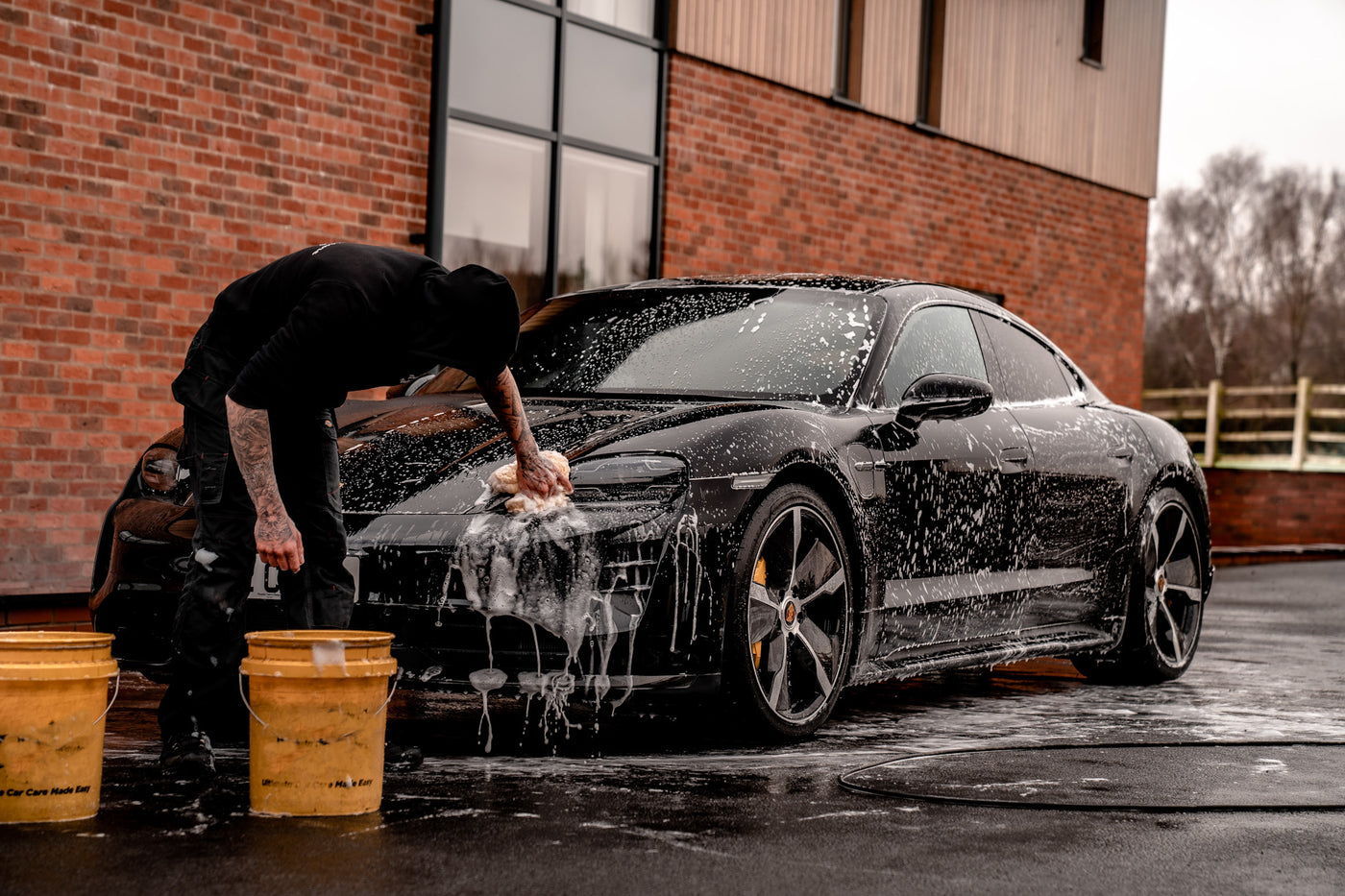
The two-bucket hand wash method is the industry standard for ceramic-coated vehicles.
Use one bucket for clean wash solution
Use one bucket for rinsing the wash mitt
Use grit guards in both buckets
Wash from top to bottom
Rinse thoroughly before contact
Only pH-neutral automotive shampoos should be used. Harsh detergents degrade hydrophobic properties and strip sacrificial top layers.
Daily-driven vehicles: Every 1–2 weeks
Seasonal or garage-kept vehicles: Every 3–4 weeks
Allowing dirt and minerals to dwell on the surface accelerates coating degradation.


Improper drying is a common cause of water spotting and micro-marring.
Use high-quality microfiber drying towels
Blot or glide gently with minimal pressure
Dry in shaded areas whenever possible
Avoid air drying
Mineral deposits left behind from water evaporation reduce gloss and interfere with hydrophobic behavior.
Water spots form when mineral-rich water dries on the surface and bonds to the coating.
Hard water exposure
Sunlight during washing
Infrequent drying
Wash during cooler parts of the day
Dry immediately after rinsing
Use deionized or filtered water when available
Prompt removal prevents mineral etching into the coating surface.
Even ceramic-coated vehicles accumulate bonded contamination over time.
Iron and fallout removers dissolve ferrous particles without mechanical abrasion. Chemical decontamination is safe when coating-compatible products are used.
Light clay or synthetic clay alternatives may be used sparingly with proper lubrication. Aggressive claying is avoided to preserve coating thickness.
Decontamination restores water beading and surface smoothness.
Maintenance sprays, sometimes referred to as ceramic boosters, replenish hydrophobic properties and enhance gloss.
Reinforce water repellency
Add slickness
Protect the base coating
These products do not replace the ceramic coating but act as a sacrificial layer.
Every 2–4 months
After decontamination services
Professional maintenance programs often include booster applications as part of scheduled care.
Automatic car washes are not recommended for ceramic-coated vehicles.
Abrasive brushes induce micro-scratches
Harsh chemicals degrade coating performance
Recycled water increases contamination risk
Touchless washes are less damaging but still rely on strong chemicals that reduce coating longevity.
Cold climates place additional stress on ceramic coatings.
Increase wash frequency to remove road salt
Avoid prolonged salt exposure
Use coating-safe pre-wash solutions
Ceramic coatings provide chemical resistance, but accumulation of salt and grime reduces hydrophobic behavior if not removed regularly.
A ceramic coating may require professional maintenance when:
Water no longer beads or sheets effectively
Surface feels rough after washing
Gloss appears muted
Contaminant buildup becomes visible
Maintenance services restore performance without requiring coating reapplication.
Professional maintenance services provide controlled care that extends coating lifespan.
Safe hand wash
Chemical decontamination
Coating-safe drying
Hydrophobic booster application
Surface inspection
Scheduled maintenance protects the initial investment made in ceramic coating installation.
Ceramic coating maintenance preserves hydrophobic behavior, gloss, and protective performance over the coating’s lifespan. Regular safe washing, controlled decontamination, and periodic booster applications prevent premature degradation. In environments with salt, industrial fallout, and variable weather, consistent maintenance is essential for long-term results.
Ceramic coatings deliver maximum value only when proper maintenance practices are followed.