


Professional Paint Decontamination Services in Halifax
Clay bar decontamination is a critical paint correction preparation process that removes bonded surface contaminants from automotive paint, glass, and exterior trim. This guide explains clay bar decontamination in detail, outlines when the service is required, and describes how professional clay bar treatment improves paint clarity, gloss, and protection longevity for vehicles serviced by HFX Detail Guys in Halifax.
Clay bar decontamination is a mechanical paint-cleaning process that removes embedded contaminants from a vehicle’s exterior surfaces. The process uses a specially engineered detailing clay combined with a lubricant to safely extract particles that washing alone cannot remove.
Bonded contaminants include industrial fallout, rail dust, brake dust, overspray, road tar, and airborne pollutants. These particles lodge into clear coat pores and create surface roughness that reduces gloss and interferes with waxes, sealants, and ceramic coatings.
A properly decontaminated surface feels smooth to the touch and allows protective products to bond correctly.
Vehicle paint is constantly exposed to environmental contamination. Even new vehicles accumulate bonded debris during transport, storage, and daily driving. Standard washing removes loose dirt but does not address contaminants that have chemically or mechanically bonded to the clear coat.
Clay bar decontamination is necessary because it:
Removes contamination that washing cannot eliminate
Restores paint smoothness and clarity
Improves reflectivity and color depth
Prepares paint for polishing, waxing, or ceramic coating
Extends the lifespan of paint protection products
Without decontamination, polishing pads clog prematurely, waxes bond inconsistently, and ceramic coatings fail to reach their designed durability.
Clay bar decontamination targets bonded surface contaminants, not defects such as scratches or swirl marks. The most common contaminants include:
Microscopic metal particles released from factories, refineries, and construction sites oxidize on paint and form rust spots.
Vehicles transported by rail accumulate iron particles that embed into the clear coat and gradually corrode.
High-temperature metallic brake particles bond aggressively to paint and wheels.
Sticky petroleum-based debris adheres to lower panels and rocker areas.
Airborne organic compounds settle on paint and harden over time.
Fine paint particles from nearby refinishing or construction projects adhere to vehicle surfaces.
Clay bar decontamination is recommended when one or more of the following conditions are present:
Paint feels rough or gritty after washing
Visible orange or brown specks appear on light-colored paint
Loss of gloss despite regular washing
Wax or sealant durability is reduced
Vehicle has been parked near industrial or coastal areas
Vehicle is being prepared for polishing or ceramic coating
A simple plastic bag test—gently sliding a hand across clean paint through a thin plastic bag—amplifies surface contamination and reveals bonded debris.
Paint decontamination is most effective when mechanical and chemical methods are combined.
Physically shears contaminants from the surface
Effective on a wide range of bonded debris
Leaves paint smooth and ready for correction
Dissolves ferrous particles using reactive chemistry
Reduces the amount of mechanical contact required
Minimizes marring risk
Professional detailing services often perform chemical decontamination first, followed by clay bar treatment for complete surface cleansing.
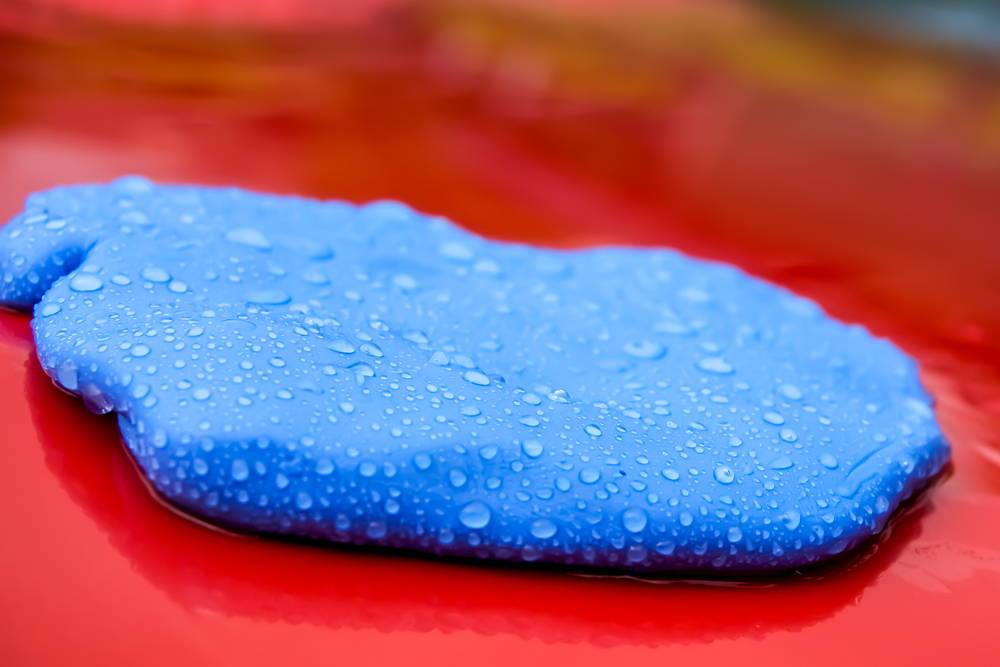

Professional clay bar decontamination follows a controlled, multi-step process designed to maximize cleaning effectiveness while minimizing surface marring.
A pH-balanced automotive shampoo removes loose dirt and debris to prevent dragging abrasive particles across the paint.
Iron and fallout removers are applied to dissolve ferrous contamination and reduce mechanical abrasion during claying.
A dedicated clay lubricant or diluted quick detailer provides a slick surface that allows the clay to glide safely.
The clay is gently moved across the surface using straight-line motions. Embedded contaminants are lifted into the clay material.
The clay is folded frequently to expose a clean working surface and prevent reintroducing contaminants.
Remaining lubricant residue is removed, leaving the surface clean and smooth.
Paint is inspected under proper lighting to confirm contamination removal.
Clay bar decontamination does not damage paint when performed correctly. However, improper technique or inadequate lubrication can cause light marring.
Professional detailing minimizes risk by:
Using high-quality clay or synthetic clay media
Maintaining sufficient lubrication at all times
Applying minimal pressure
Inspecting and folding clay frequently
Any minor marring created during claying is typically addressed during subsequent polishing stages.
Clay bar decontamination is a preparatory process, not a corrective one.
| Process | Purpose |
|---|---|
| Clay Bar Decontamination | Removes bonded contaminants |
| Paint Polishing | Removes swirl marks and light scratches |
| Wax / Sealant | Adds short-term protection |
| Ceramic Coating | Provides long-term surface protection |
Skipping decontamination before polishing reduces polishing effectiveness and increases pad wear.
Ceramic coatings require direct contact with clean clear coat to achieve proper bonding. Any contamination left on the surface prevents uniform adhesion.
Clay bar decontamination before ceramic coating:
Improves coating bond strength
Enhances coating durability
Prevents high spots caused by trapped debris
Improves optical clarity
Professional ceramic coating packages always include full decontamination as a mandatory preparation step.

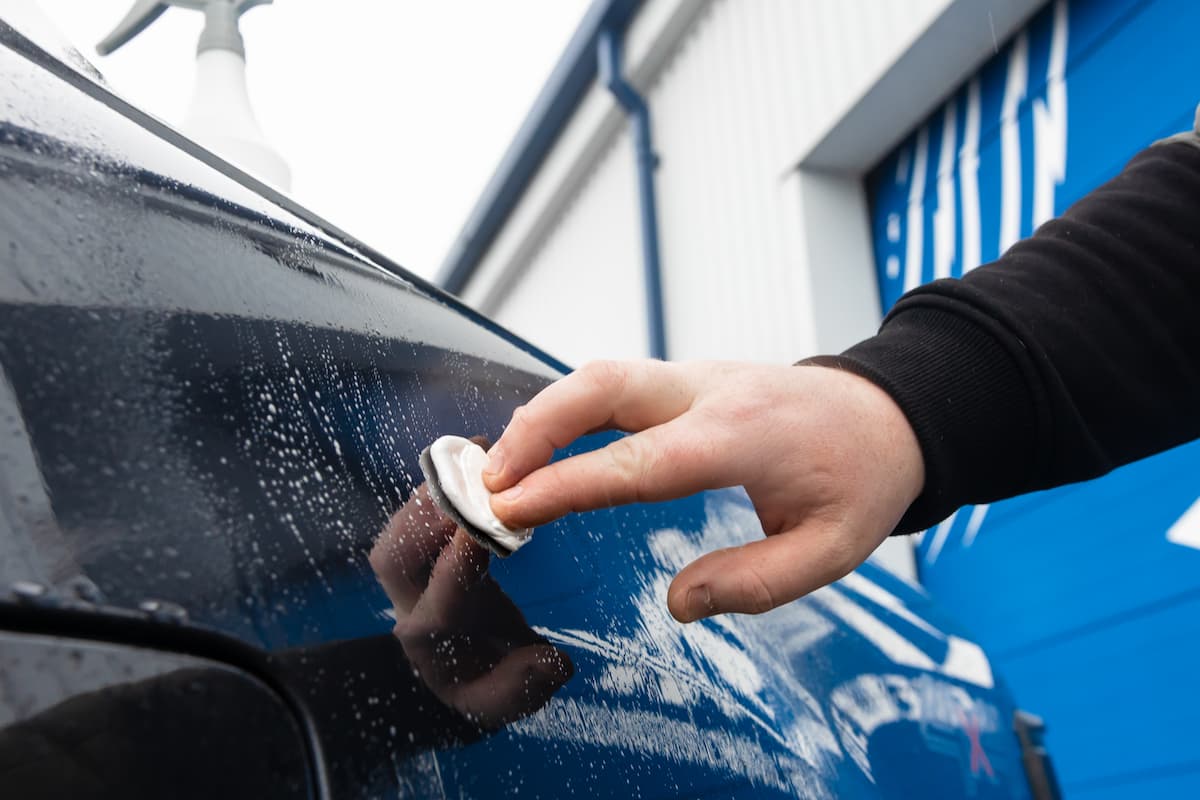
Clay bar decontamination frequency depends on driving conditions, environment, and storage.
Daily-driven vehicles: Every 6–12 months
Industrial or coastal environments: Every 4–6 months
Garage-kept vehicles: Once per year
Before ceramic coating: Always required
Overuse of clay is unnecessary. Decontamination should be performed based on surface condition rather than a fixed schedule.
Clay bar decontamination is effective on multiple exterior surfaces when performed properly.
Primary application area for removing bonded contaminants.
Removes mineral deposits, overspray, and industrial fallout for improved visibility.
Restores smoothness prior to polishing or protective film application.
Removes embedded brake dust when combined with proper wheel cleaning products.
Clay should not be used on matte paint, satin finishes, or uncoated plastics without surface-specific products.
While clay bar kits are available to consumers, professional service offers significant advantages.
Controlled technique reduces marring risk
Commercial-grade products and lubricants
Integrated chemical decontamination
Proper lighting and inspection
Seamless integration with polishing and protection
Insufficient lubrication
Excessive pressure
Reusing contaminated clay
Inducing surface scratches
For vehicles receiving advanced paint correction or ceramic coatings, professional decontamination is strongly recommended.
Vehicles driven in Halifax experience unique contamination challenges due to:
Coastal salt exposure
Industrial shipping activity
Seasonal road treatment chemicals
Variable weather patterns
These conditions accelerate bonded contamination accumulation, making regular decontamination an important part of exterior maintenance for vehicles in the region.
No. Clay bar decontamination removes bonded contaminants but does not remove scratches or swirl marks.
Yes. New vehicles often require decontamination due to transport-related fallout and storage exposure.
Yes. Proper technique and lubrication make clay bar treatment safe for automotive clear coat.
No. Clay bar decontamination prepares the surface for polishing but does not correct paint defects.
Clay bar decontamination is an essential automotive detailing process that removes bonded surface contaminants, restores paint smoothness, and prepares vehicles for polishing and protection. In Halifax’s demanding environmental conditions, routine decontamination improves paint longevity, appearance, and protective product performance.
For vehicle owners seeking maximum gloss, durability, and long-term paint health, professional clay bar decontamination is a foundational service within any comprehensive detailing program.